
Renovation guide
Gutterglove vs Standard Gutter Guards in Ontario Winters
A practical breakdown of how surgical-grade stainless steel micro-mesh compares to plastic screens, foam inserts, and reverse-curve surface tension helmets through harsh Southwestern Ontario freeze-thaw cycles. Written for homeowners in London, Hamilton, Burlington, and Kitchener-Waterloo weighing long-term gutter protection against heavy snow loads, ice dams, and seasonal debris.
Why Southwestern Ontario winters destroy standard gutter guards
Homeowners across Southwestern Ontario face a challenging winter climate for exterior drainage. Unlike regions with persistent sub-zero temperatures, the corridor stretching from London through Kitchener-Waterloo and down to Hamilton and Burlington experiences dozens of distinct freeze-thaw cycles every season between late November and early April.
During a typical Southwestern Ontario winter, daytime temperatures hover around zero while nighttime temperatures plunge below freezing. Melting roof snow trickles toward the eaves, encounters cold metal gutters, and refreezes into slush and solid ice. Conventional gutter protection products, most notably vinyl perforated screens, foam filter inserts, and metal surface-tension hoods, are frequently overwhelmed by these specific conditions.
When meltwater cannot enter the trough because the guard aperture is frozen over or clogged with fine autumn debris, water pours directly over the gutter lip. That overflow saturates foundation soil, compromises basement waterproofing membranes, and leads to costly foundation repairs. Homeowners exploring long-term foundation health should also review the practical drainage factors detailed in our guide to the cost of basement renovation in London Ontario. Absolute Home Creations brings over 35 years of residential building and exterior renovation experience to evaluating how different gutter protection systems hold up in local winter conditions.
How different gutter guard systems work
Every gutter guard design attempts to solve the same problem: keep organic matter out while allowing clean rainwater to pass into the downspout system. However, the engineering choices behind each guard type dictate how that system reacts when subjected to freezing slush, wet snow accumulation, and roof runoff.
Perforated plastic and aluminum screens
Perforated screens are the most common DIY and entry-level contractor product on the market. These flat sheets of stamped aluminum or rigid PVC sit directly on top of the gutter trough and feature stamped holes ranging from one-eighth inch to one-quarter inch in diameter.
During autumn, these openings readily snag maple keys, oak tassels, and small pine needles. When cold weather arrives, wet debris trapped in the perforations freezes solid into a continuous sheet of ice. Any subsequent daytime snowmelt cannot penetrate the frozen surface and simply cascades over the exterior edge of the trough. Furthermore, lightweight plastic screens tend to become brittle below minus ten degrees Celsius, causing them to crack or pop out of gutter brackets when loaded with wet, heavy lake-effect snow.
Reverse-curve surface tension helmets
Reverse-curve systems, often referred to as gutter helmets or surface-tension hoods, feature a solid curved metal cover with a narrow horizontal slot along the outer nose. Water flows over the roof edge, clings to the curved profile via liquid surface tension, and rolls inward into the hidden trough, while leaves fall over the side.
While surface-tension guards handle broad maple leaves reasonably well during dry autumn days, winter conditions present major challenges. Liquid surface tension fails when temperatures drop near freezing because slush, freezing rain, and cold meltwater do not adhere to smooth metal curves. Instead, winter runoff skips directly off the nose of the hood, forming dangerous rows of icicles suspended over entry paths and driveways. In addition, hornets, wasps, and small birds frequently build nests inside the covered channel during spring and summer, creating hidden blockages that back up meltwater months later.
Foam inserts and bottle-brush guards
Foam inserts are triangular wedges of open-cell polyurethane foam placed directly inside the gutter channel. Water filters through the porous foam cells while leaves rest on top until blown away by the wind. Brush guards use a similar concept, featuring stiff polypropylene bristles wrapped around a central twisted steel wire core, resembling an oversized bottle brush.
Both systems perform poorly in Canadian winter climates. The open pores of polyurethane foam act like a giant sponge, holding water continuously through late autumn. When freezing temperatures arrive, that saturated foam freezes into a solid, multi-kilogram block of ice that fills the entire cross-section of the trough. The expansion often bends the gutter outward, tearing mounting spikes and fascia brackets away from the roofline. Saturated foam also traps asphalt shingle granules washed off the roof, turning into an impenetrable mud brick within two to three seasons.
Gutterglove surgical-grade stainless steel micro-mesh
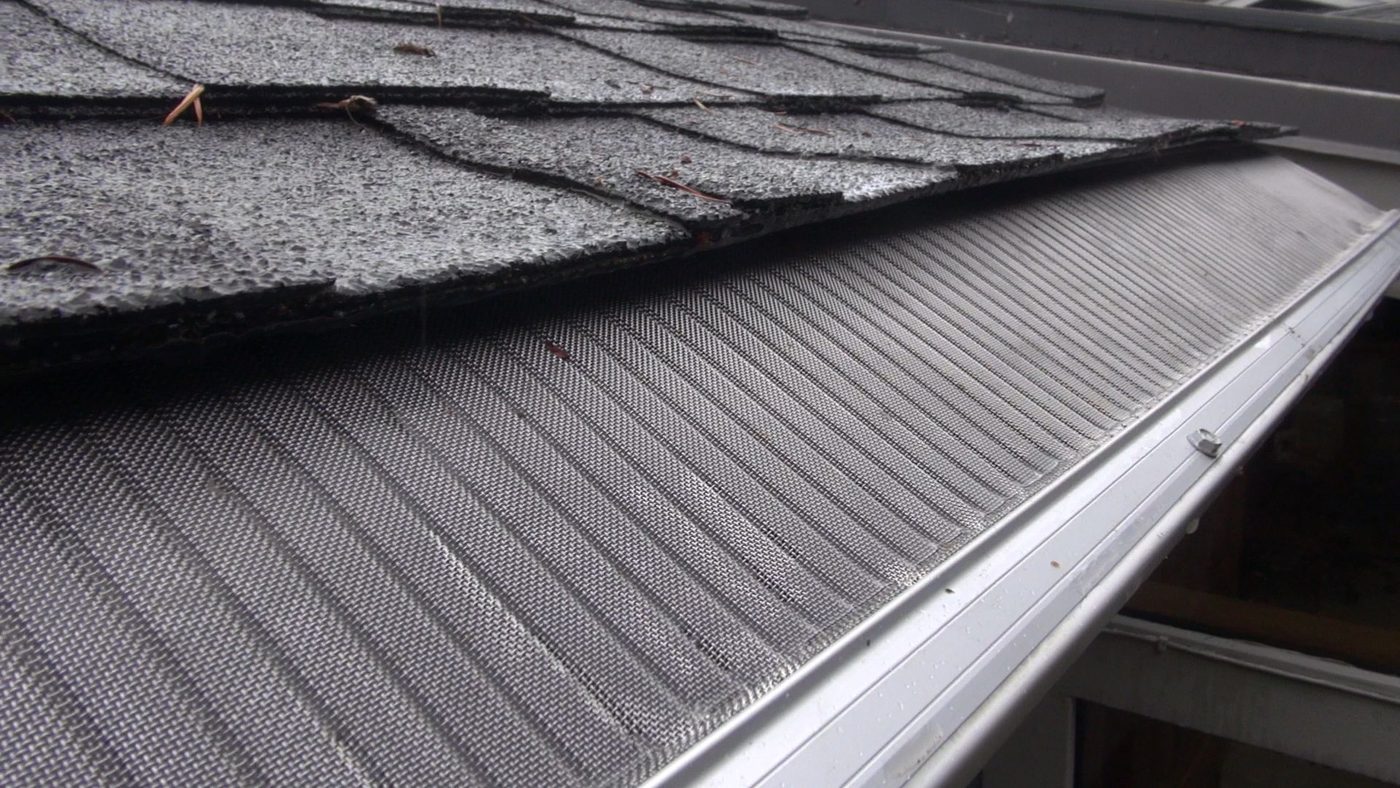
Micro-mesh technology approaches filtration using microscopic apertures rather than wide perforations or surface tension curves. Gutterglove systems utilize a woven mesh made from surgical-grade stainless steel wire. The manufacturer specifies a 30-mesh weave, which keeps out fine shingle sand, pine needles, and maple seeds while drawing water straight through into the trough.
The stainless steel mesh is secured into a structural channel made of heavy-gauge extruded anodized aluminum. This rigid anodized frame bridges the gutter front-to-back, fastening to the front gutter lip and the fascia or sub-roof deck. The structural aluminum frame adds significant cross-sectional rigidity to the entire gutter system, helping prevent standard residential aluminum gutters from sagging or pulling away from the fascia board under severe ice or snow loads. Absolute Home Creations is the exclusive Ontario dealer and factory-certified installer for Gutterglove gutter protection.
The primary winter failure points in Canadian conditions
Evaluating gutter guards for homes in Southern Ontario requires examining four specific structural and thermal failure modes:
| Guard Type | Freeze-Thaw Handling | Snow Load Capacity | Fine Debris Blocking | Expected Life Span |
|---|---|---|---|---|
| Perforated Plastic Screens | Freezes shut; cracks in extreme cold | Low; sags into trough | Snags pine needles and seeds | 2 to 5 years |
| Stamped Aluminum Screens | Freezes over; moderate ice expansion warping | Medium; bends under heavy drifts | Catches maple keys and twigs | 5 to 8 years |
| Foam Filter Wedges | Freezes solid; forces water over fascia | Very low; adds heavy deadweight | Silt and granules clog foam interior | 1 to 3 years |
| Reverse-Curve Hoods | Surface tension fails; icicles form on nose | High; solid top plate | Slot attracts wasps and pine needles | 10 to 15 years |
| Gutterglove Micro-Mesh | Meltwater enters freely; frame resists warping | Exceptional; structural anodized spine | Blocks shingle grit, seeds, and needles | Decades |
1. Freeze-thaw cycles and pore clogging
When wet snow settles onto a cold gutter, meltwater trickling from the warm roof upper deck must immediately pass through the guard before it refreezes. On fine-aperture woven stainless mesh, the surface tension of water draws droplets down into the trough rapidly. Because the mesh sits taut across an anodized aluminum spine without wide horizontal shelves, ambient airflow above and below the mesh helps evaporate surface moisture quickly once runoff ceases.
2. Snow load, ice weight, and fascia pullout
Wet, compacted snow can weigh in excess of 15 to 20 pounds per cubic foot. In heavy lake-effect snow corridors like London and Kitchener-Waterloo, a standard five-inch residential gutter filled with snow and layered ice carries substantial weight.
Flimsy DIY plastic or thin aluminum drop-in screens have no structural connection to the fascia. Under heavy winter snow drift loads, they collapse into the bottom of the gutter, blocking downstream water flow. In contrast, Gutterglove forms an engineered box beam with the existing gutter. The rigid extruded aluminum frame mounts firmly to the front lip and fastens securely at the back, transferring downward snow loads into the roof rafter tails and fascia board rather than letting the gutter deform.
3. Pine needles, maple keys, and shingle grit
Most gutter guard failures during winter actually begin five months earlier. In early summer, Southwestern Ontario trees shed heavy loads of oak tassels, maple samaras (keys), and pollen strings. In late summer and autumn, spruce, cedar, and white pine needles fall alongside shedding mineral granules from asphalt shingles.
When coarse perforated screens let shingle grit and pine needles pass into the trough, a dense organic sludge forms on the gutter floor. By November, this sludge restricts flow toward the downspouts. When winter arrives, standing water trapped behind organic clogs freezes solid, creating frozen dams that would not exist in clean troughs. Gutterglove's stainless mesh excludes shingle grit and fine organic debris at the surface, keeping the inside of the trough clean year-round.
4. Ice damming: separating fact from fiction
A widespread misconception among homeowners is that gutter guards cause roof ice dams. In reality, gutter guards neither cause nor prevent ice dams.
Ice dams occur when indoor household heat escapes into an unconditioned attic space due to missing air barriers, inadequate insulation, or insufficient soffit-to-ridge roof ventilation. Escaping heat warms the underside of the upper roof deck, melting the bottom layer of snow accumulation even when outdoor ambient temperatures sit well below freezing. That melted snow runs down the warm roof until it hits the cold overhang and eaves, where it refreezes into a thick ice ridge.
Whether your home has open gutters, plastic screens, or micro-mesh guards, an ice dam will form if heat loss from the attic warms the upper roof deck. Gutter protection systems do not generate heat. What Gutterglove ensures is that when daytime temperatures rise and ice begins melting, the water has an unobstructed, debris-free path into downspouts as soon as the drain line clears, preventing backups behind fascia and roof edges.
Homeowners wanting independent consumer research can review evaluations from Consumer Reports (opens in a new tab) and safety guidance from the Electrical Safety Authority (opens in a new tab) regarding the safe installation of heating cables if severe structural ice damming requires active intervention.
Installation standards and building code considerations
Proper performance depends heavily on the installation method. A high-quality micro-mesh guard installed at the wrong angle or over a compromised gutter system will underperform.
Trough pitch and downspout capacity
Before installing any gutter guard system, the existing gutter runs must be inspected, cleaned, and properly pitched. Under the Ontario Building Code (opens in a new tab), exterior rainwater drainage must be directed safely away from building foundations to prevent hydrostatic pressure and basement moisture intrusion.
Gutters should maintain a minimum downward slope of one-quarter inch per ten feet of horizontal run toward the downspouts. If older gutter brackets have loosened over time, water pools in low spots, freezing into solid ice chunks that obstruct winter flow. Certified Gutterglove installers re-pitch gutters, replace worn hidden hangers with heavy-duty screw-in brackets, and seal all end caps and miters with professional-grade polyurethane exterior sealant prior to guard placement.
Roof pitch and mesh angle alignment
Gutterglove systems can be installed either tucked gently under the first course of asphalt shingles or fastened flat to the fascia board using custom bending angles. Matching the guard slope to the natural roof pitch is essential. If a guard is installed perfectly flat on a steep roof, high-velocity rainwater can sheet across the surface and overshoot the gutter during heavy summer storms. Conversely, matching the pitch allows wind currents to blow dry leaves and debris across the mesh surface naturally, maintaining self-cleaning characteristics throughout the autumn.
Downspout discharge and foundation protection
Gutter guards protect the troughs, but winter runoff must be carried far enough away from the home to prevent foundation damage. Downspouts should discharge a minimum of six feet away from the foundation wall onto splash pads, or connect to buried frost-free discharge pipes terminating well away from property lines. Ensuring proper roof runoff management works hand-in-hand with exterior upgrades such as proper flashing, window caps, and siding maintenance, which you can explore further through our specialized windows, doors, and siding services.
Cost comparison: DIY guards vs professional micro-mesh
When evaluating the cost of gutter protection in Southwestern Ontario, homeowners should balance initial material costs against replacement frequency, ladder safety, and foundation risk:
- Perforated plastic or vinyl screens: Materials cost roughly $2 to $4 per linear foot for DIY kits. Professional installation typically costs $7 to $12 per linear foot. Expected usable lifespan is 2 to 5 years before brittle plastics crack from freeze-thaw stress or sag under winter snow.
- Surface tension metal helmets: Available almost exclusively through specialized franchise dealers. Installed costs typically run $25 to $45 per linear foot. While durable, the high price point often comes with aggressive sales presentations and potential icicle buildup over building entrances during winter.
- Foam inserts and bristle brushes: Material costs run $3 to $6 per linear foot for retail DIY packs. Lifespan rarely exceeds 1 to 3 years due to permanent shingle grit compaction and saturated winter freezing.
- Gutterglove Pro micro-mesh: Professional installation by a certified contractor typically ranges from $18 to $30 per linear foot, depending on roof pitch, building height, fascia conditions, and required gutter re-pitching. Backed by the manufacturer's limited warranty, the system lasts for decades without replacement.
For a standard Southwestern Ontario two-storey suburban home with roughly 150 to 180 linear feet of gutters, professional Gutterglove installation represents an investment of $2,700 to $5,400. When compared against paying a professional exterior service $150 to $250 per visit for bi-annual gutter cleaning over twenty years, plus the safety hazard of climbing icy extension ladders in autumn, permanent micro-mesh protection is cost-effective.
Seasonal maintenance expectations
No gutter guard system on the market is completely maintenance-free. Anyone promising a zero-maintenance gutter guard in Canada is misleading you.
While Gutterglove prevents leaves, pine needles, and maple keys from entering the gutter channel, high-volume autumn debris can occasionally rest on top of the mesh during long stretches without rain or wind. In most residential settings, normal wind currents naturally sweep dry leaves off the aluminum frame.
For sheltered roof valleys or heavily treed lots surrounded by mature white pines, homeowners should plan on a brief annual rinse. In early spring, once the snow clears, take a standard garden hose equipped with an ordinary brass spray nozzle and spray the mesh from the ground level to flush away surface pollen, tree sap, and dust. This simple task takes 15 to 20 minutes for the average home and eliminates the dangerous necessity of climbing ladders with a bucket and trowel to scoop rotting sludge out of an open trough.
Get a written quote
If you want to protect your gutters and foundation from winter freeze-thaw damage, contact Absolute Home Creations for an honest, upfront assessment. As Southwestern Ontario's certified Gutterglove dealer and a RenoMark-certified builder with over 35 years of local residential experience, our team inspects your gutter pitch, fascia stability, and exterior drainage before custom-fitting permanent micro-mesh protection across London, Hamilton, Burlington, and Kitchener-Waterloo.
Email your project details, location, and photos to inquiries@absolutehomecreations.com to request your written quote.
Get a free written quote
Email us a few details about the project and a real person gets back to you — usually the same day. No forms, no call centre.
- Free estimatesAlways, in writing
- PermitsWe pull them and meet the inspector
- ServingLondon, Hamilton/Burlington, Kitchener-Waterloo
Questions
Frequently asked questions
Do gutter guards prevent ice dams in Ontario?
No, gutter guards do not prevent ice dams. Ice dams are caused by heat leaking from the living space into the attic, which warms the upper roof deck and melts underside snow that refreezes at cold eaves. Gutter guards neither create nor eliminate this thermal issue. However, micro-mesh guards ensure that when seasonal melt begins, gutter channels remain completely free of debris clogs so runoff drains immediately into downspouts rather than backing up under shingles.
Can snow and ice weight pull gutters off the house?
Yes, heavy wet snow and thick ice accumulations can pull poorly secured gutters off the fascia board. This commonly occurs with cheap perforated screens or foam inserts that hold heavy, saturated ice blocks inside the trough. Gutterglove helps protect against fascia pullout because its heavy-duty anodized aluminum frame spans the gutter rim and fastens securely to the building structure, functioning like a structural truss that supports the gutter profile under snow loads.
Will maple keys and pine needles get caught in Gutterglove?
No, maple keys, oak tassels, and pine needles cannot penetrate Gutterglove's stainless steel micro-mesh. The aperture size is small enough to block fine asphalt shingle granules and tiny pine needles. Larger debris such as maple seeds rest on the slick exterior surface until dry winds blow them off the roofline.
Does Gutterglove work on metal or cedar shake roofs?
Yes. Gutterglove can be installed on homes with asphalt shingle roofs, standing-seam metal roofs, steel shingles, or cedar shakes. Installers adapt the mounting angle using specialized bracket configurations that secure the anodized frame directly to the fascia board without lifting or puncturing specialty roofing materials.
Is professional installation required for Gutterglove Pro?
While retail-grade mesh products exist, Gutterglove Pro uses commercial-gauge extruded aluminum frames and industrial surgical-grade stainless steel mesh that require professional sizing and fastening. Certified installation ensures proper trough slope, secure bracket fastening, miter sealing, and compliance with the manufacturer's limited warranty.
Keep exploring
Related services
 Kitchens & Bathrooms
Award-winning Cardinal cabinetry, new layouts, flooring and lighting — the two rooms that return the most on renovation.
 Basements & Attics
Rec rooms, in-law suites, home offices and legal basement apartments with separate entrances.
 Windows, Doors & Siding
North Star and Novatech windows and doors, vinyl siding, soffit, fascia and capping.
Free written estimates
Want this priced for your house?
Email us a few details and a real person from the family gets back to you — usually the same day. No forms to fill out, no call centre, no pressure.